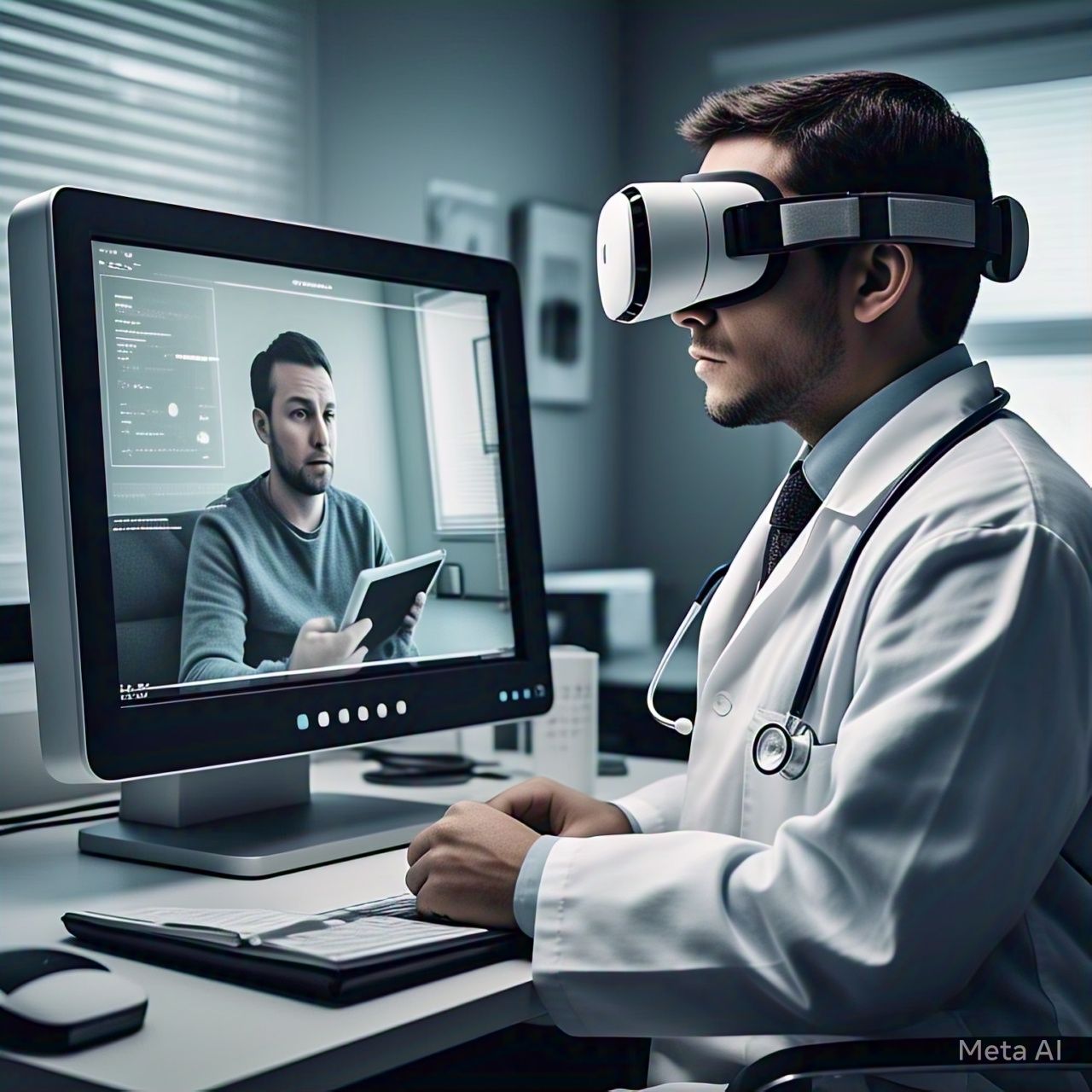
Table of Contents
- Introduction
- Understanding AI in Telemedicine
- How AI is Transforming Virtual Healthcare
- AI-Powered Diagnosis and Decision Support
- Chatbots and Virtual Health Assistants
- Remote Patient Monitoring (RPM)
- Predictive Analytics in Healthcare
- Benefits of AI in Telemedicine
- Challenges and Limitations
- The Future of AI in Virtual Healthcare
- Conclusion
- FAQs
- Citations
Introduction
Telemedicine has transformed healthcare by enabling remote consultations, reducing hospital visits, and improving accessibility. The integration of Artificial Intelligence (AI) is further revolutionizing virtual healthcare by providing intelligent diagnostics, real-time monitoring, and automated decision-making, improving both patient outcomes and physician efficiency.
Understanding AI in Telemedicine
AI in telemedicine refers to the use of machine learning algorithms, natural language processing (NLP), and advanced data analytics to assist in diagnosing diseases, monitoring patient health, and delivering personalized treatment plans remotely. By leveraging AI, virtual healthcare can become more accurate, accessible, and efficient.
How AI is Transforming Virtual Healthcare
1. AI-Powered Diagnosis and Decision Support
AI algorithms analyze medical data, including imaging, laboratory results, and patient history, to assist doctors in making more accurate diagnoses. These systems provide real-time insights and suggest possible treatment options.
2. Chatbots and Virtual Health Assistants
AI-driven chatbots and virtual assistants provide 24/7 support by answering medical inquiries, scheduling appointments, and guiding patients through symptom checks. These tools help reduce the workload on healthcare providers and offer immediate assistance to patients.
3. Remote Patient Monitoring (RPM)
AI-powered remote monitoring devices track vital signs such as heart rate, blood pressure, and oxygen levels. AI analyzes these readings in real time, alerting healthcare providers to potential health risks before they become emergencies.
4. Predictive Analytics in Healthcare
AI predicts potential health issues based on patient history and lifestyle factors. Predictive models help in early disease detection, reducing hospitalizations, and managing chronic illnesses more effectively.
| AI Feature in Telemedicine | Impact on Healthcare |
|---|---|
| AI Diagnosis & Decision Support | Enhances diagnostic accuracy |
| Chatbots & Virtual Assistants | Improves patient engagement and support |
| Remote Patient Monitoring | Enables real-time health tracking |
| Predictive Analytics | Helps in early disease detection |
Benefits of AI in Telemedicine
- Improved Access to Healthcare: AI enables patients in remote areas to receive expert medical care.
- Enhanced Diagnostic Accuracy: AI assists doctors in making precise diagnoses and treatment recommendations.
- Reduced Healthcare Costs: AI minimizes hospital visits and unnecessary tests, reducing overall medical expenses.
- Faster Response Times: AI chatbots provide instant medical assistance and reduce waiting times.
- Better Chronic Disease Management: AI tracks patient data to optimize long-term healthcare plans.
Challenges and Limitations
- Data Privacy Concerns: AI relies on sensitive medical data, raising cybersecurity risks.
- Regulatory Compliance: AI systems must adhere to strict healthcare laws and guidelines.
- Lack of Human Touch: AI-driven consultations lack the empathy and personal interaction of in-person visits.
- Integration Issues: Many healthcare providers struggle to integrate AI with existing medical systems.
- Bias in AI Algorithms: AI models may have biases based on the data they are trained on, leading to disparities in healthcare.
The Future of AI in Virtual Healthcare
- AI-Driven Wearables: Smart devices will provide continuous health monitoring with AI-driven insights.
- Personalized Medicine: AI will analyze genetic and lifestyle data to create tailored treatment plans.
- Blockchain for Security: AI-powered telemedicine will integrate blockchain technology for enhanced data privacy.
- AI-Powered Robotics: Virtual consultations will be supported by AI-driven robotic systems for physical examinations.
- Integration with 5G Networks: Faster data transmission will improve telehealth services, allowing for high-resolution imaging and real-time monitoring.
Conclusion
AI is reshaping telemedicine by making healthcare more accessible, efficient, and precise. While challenges remain, advancements in AI will continue to enhance virtual healthcare, bridging the gap between doctors and patients worldwide. The future of AI in telemedicine promises even greater breakthroughs, ensuring better patient care and streamlined healthcare operations.
FAQs
1. How does AI improve telemedicine?
AI enhances telemedicine by providing automated diagnosis, predictive analytics, remote monitoring, and chatbot-based assistance, improving efficiency and accuracy.
2. Can AI replace human doctors in telemedicine?
No, AI serves as a supportive tool for doctors but cannot replace human expertise, empathy, and decision-making capabilities.
3. Is AI-powered telemedicine safe?
Yes, but data privacy concerns and regulatory compliance must be addressed to ensure secure and ethical AI use.
4. How does AI help in remote patient monitoring?
AI analyzes real-time health data from wearable devices, alerting doctors to potential health risks before they escalate.
5. What is the future of AI in virtual healthcare?
Future advancements include AI-driven wearables, blockchain security, personalized medicine, and 5G-enabled telehealth services.
Citations
- Johnson, M. (2023). Artificial Intelligence in Telemedicine: A New Era of Healthcare. Journal of Digital Medicine.
- Carter, L. (2022). The Role of AI in Remote Patient Monitoring and Predictive Healthcare. Telehealth Review.
- White, T. (2023). Chatbots and Virtual Assistants in Healthcare: AI’s Growing Influence. HealthTech Innovations Journal.