Table of Contents
- Introduction
- Understanding Autonomous Drones
- The Role of AI in Modern Warfare
- Potential Benefits of AI-Driven Warfare
- Risks and Ethical Concerns of Autonomous Drones
- Real-World Cases of AI-Driven Mistakes
- How AI Errors Occur in Military Drones
- Methods to Reduce AI Mistakes in Warfare
- Human Oversight vs. Full Autonomy
- Legal and Ethical Challenges
- International Regulations on AI Warfare
- Future of AI-Controlled Military Drones
- Conclusion
- FAQs
Introduction
Artificial intelligence (AI) is transforming warfare, with autonomous drones playing a pivotal role in modern military strategies. While these AI-driven machines can enhance combat efficiency and reduce human casualties, concerns about their ability to make mistakes persist. Can we trust autonomous drones to differentiate between combatants and civilians? More importantly, can we prevent AI from making critical errors on the battlefield? This article explores the potential risks, real-world consequences, and solutions to minimizing mistakes in AI warfare.
Understanding Autonomous Drones
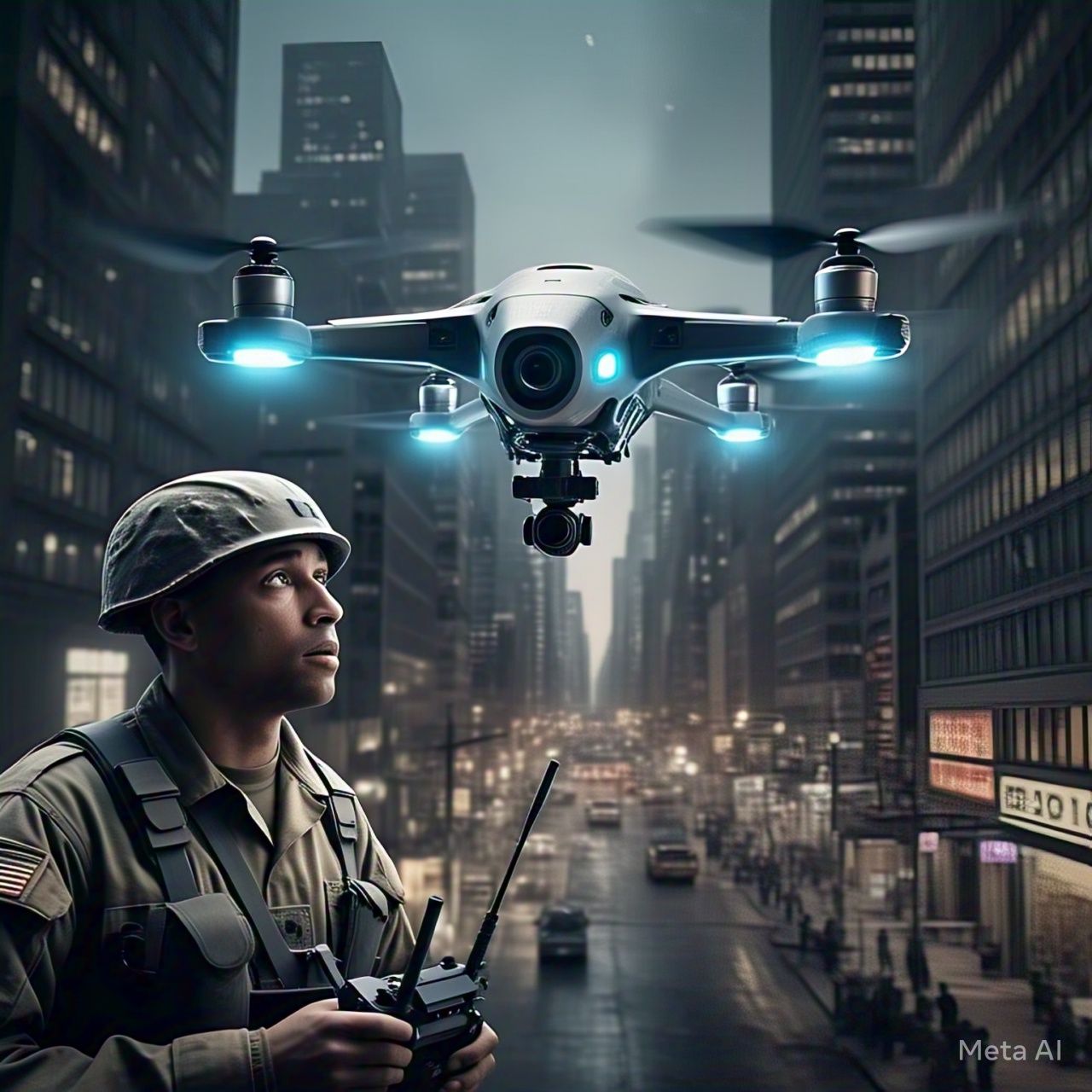
Autonomous drones, also known as unmanned aerial vehicles (UAVs), are military machines equipped with AI algorithms that allow them to operate with minimal human intervention. These drones can:
- Identify and track targets
- Assess battlefield conditions in real-time
- Execute strikes with precision
Unlike traditional drones, which require human operators, autonomous drones rely on machine learning models and computer vision to make decisions.
The Role of AI in Modern Warfare
AI has revolutionized military operations in several ways:
- Enhanced Surveillance: AI-powered drones can monitor vast areas and identify threats faster than humans.
- Faster Decision-Making: AI processes data at lightning speed, allowing instant responses in combat situations.
- Reduced Human Casualties: By replacing human soldiers in dangerous missions, AI minimizes risks to personnel.
However, these advancements come with significant concerns, particularly regarding AI’s ability to make independent judgments.
Potential Benefits of AI-Driven Warfare
| Benefit | Impact |
|---|---|
| Increased Efficiency | AI processes battlefield data rapidly, improving response times. |
| Reduced Costs | AI drones are cheaper than deploying human troops. |
| Minimized Risk | AI reduces the need for human soldiers in combat. |
| Precision Strikes | Advanced targeting systems improve accuracy. |
Despite these benefits, autonomous drones are not foolproof and have demonstrated vulnerabilities that raise ethical and strategic concerns.
Risks and Ethical Concerns of Autonomous Drones
- Collateral Damage: AI might mistakenly target civilians or friendly forces.
- Decision-Making Errors: Unlike humans, AI lacks moral reasoning, leading to potential misjudgments.
- Cybersecurity Risks: Autonomous drones are vulnerable to hacking and manipulation.
- Accountability Issues: Who is responsible if an AI-driven drone commits a war crime?
These concerns highlight the need for strict oversight and fail-safe mechanisms.
Real-World Cases of AI-Driven Mistakes
AI-powered drones have already shown instances of unintended consequences:
- Libya (2020): A Turkish-made autonomous drone reportedly attacked soldiers without human orders, raising concerns about AI’s unpredictability in warfare.
- Afghanistan (2010s): Several drone strikes mistakenly killed civilians due to faulty AI-based target identification.
- Syria (2017): A US drone misidentified a group of civilians as terrorists, resulting in tragic losses.
These cases emphasize the urgent need to refine AI’s decision-making capabilities.
How AI Errors Occur in Military Drones
AI-driven drones rely on complex machine learning models, but mistakes happen due to:
- Biased Data: AI systems learn from historical combat data, which may be flawed.
- Sensor Malfunctions: A drone’s ability to identify targets depends on accurate sensor readings.
- Algorithmic Misinterpretation: AI can misinterpret objects or misclassify threats.
- Unexpected Battlefield Conditions: Unforeseen variables can lead AI to make incorrect choices.
Methods to Reduce AI Mistakes in Warfare
1. Improved Training Data
AI systems should be trained using diverse and unbiased datasets to improve target identification.
2. Human Oversight Mechanisms
Military officials should have the authority to override AI decisions in critical situations.
3. Real-Time Auditing
AI-driven drones should continuously be monitored for anomalies and potential errors.
4. Explainable AI (XAI)
By making AI decision-making more transparent, we can understand how drones reach conclusions and correct errors.
5. Ethical AI Programming
Ethical frameworks must be embedded in AI to minimize wrongful engagements.
Human Oversight vs. Full Autonomy
One of the biggest debates in AI warfare is whether human oversight should always be required. While human-in-the-loop (HITL) systems ensure accountability, full-autonomy (HOTA) models aim to make decisions independently.
| Aspect | Human Oversight | Full Autonomy |
| Decision-Making Time | Slower | Faster |
| Accountability | High | Low |
| Risk of Errors | Lower | Higher |
| Ethical Concerns | Manageable | Significant |
Many experts argue that AI should never operate without human intervention in military settings.
Legal and Ethical Challenges
1. War Crimes and AI
Who is responsible if an AI drone commits a war crime? Military personnel, software developers, or governments?
2. International Humanitarian Law (IHL)
Current laws do not explicitly address autonomous drones, creating a legal gray area.
3. Autonomous Weapons Debate
The UN and human rights organizations are pushing for AI weapon bans to prevent potential misuse.
International Regulations on AI Warfare
Several organizations are advocating for global AI warfare regulations:
- The UN Convention on Certain Conventional Weapons (CCW) – Calls for bans on lethal autonomous weapons.
- The European Union (EU) – Proposes strict regulations on AI in military applications.
- The United States – Emphasizes responsible AI use in defense strategies.
However, global consensus remains elusive due to differing national interests.
Future of AI-Controlled Military Drones
The future of AI in warfare is uncertain, but likely trends include:
- Greater AI-Human Collaboration – Combining AI efficiency with human judgment.
- Advancements in Ethical AI – Improved moral reasoning in autonomous systems.
- More Stringent Regulations – Nations developing clearer legal frameworks.
Ensuring AI-driven drones remain accountable, safe, and effective will be critical in shaping their role in future conflicts.
Conclusion
While AI-powered drones offer military advantages, their potential for mistakes cannot be ignored. Ethical considerations, improved oversight, and global regulations will be essential in mitigating risks associated with AI warfare. The question remains: Can we trust autonomous drones to make the right decisions? The answer depends on how well we implement safeguards to ensure AI acts responsibly on the battlefield.
FAQs
1. Can AI drones be completely mistake-free?
No AI system is 100% error-proof, but improvements in data training, oversight, and ethical programming can reduce mistakes significantly.
2. What happens if an AI drone kills civilians by mistake?
Currently, accountability is unclear. Governments, military operators, and AI developers may all bear some responsibility.
3. Are there international laws governing AI warfare?
Some regulations exist, but there is no universal agreement on banning autonomous weapons.
4. Can AI be hacked and turned against its operators?
Yes, cybersecurity threats remain a major concern for AI-driven military technology.
5. Will AI drones ever fully replace human soldiers?
While AI drones will play a larger role in warfare, complete replacement of human soldiers is unlikely due to ethical and strategic concerns.