Table of Contents
- Introduction
- Understanding AI in Smart Cities
- AI-Driven Traffic Management Systems
- AI and Autonomous Vehicles in Smart Cities
- Smart Infrastructure and IoT Integration
- AI in Public Transportation Optimization
- The Role of AI in Reducing Traffic Congestion
- AI and Sustainability: Reducing Carbon Footprint
- Challenges and Ethical Considerations
- The Future of AI in Smart Cities
- Conclusion
- FAQs
1. Introduction
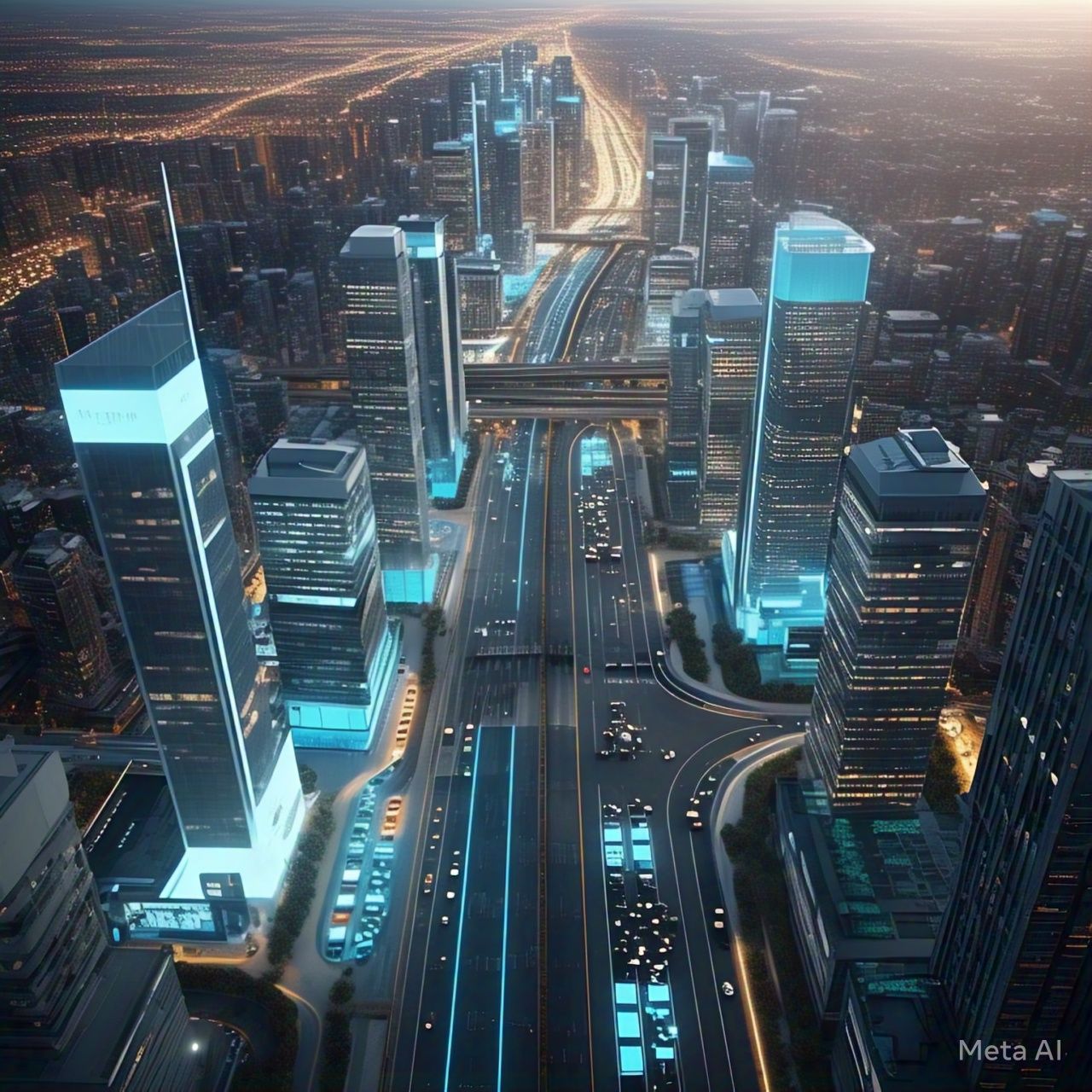
As urban populations continue to grow, traditional city infrastructure struggles to keep up with increasing demands for transportation and public services. AI-powered smart cities are emerging as the solution, revolutionizing urban management by leveraging real-time data and automation. From optimizing traffic flow to reducing carbon emissions, AI is shaping the future of modern cities. This article explores how AI-driven traffic systems and smart city infrastructure will create more efficient and sustainable urban environments.
2. Understanding AI in Smart Cities
AI in smart cities involves integrating machine learning, data analytics, and automation to optimize urban planning and services. Key areas where AI plays a role include:
- Traffic management and congestion control
- Public safety and surveillance
- Energy efficiency and waste management
- Smart public transportation systems
- Sustainable urban planning
By harnessing AI, cities can make data-driven decisions that improve residents’ quality of life.
3. AI-Driven Traffic Management Systems
Traffic congestion is one of the biggest challenges in urban areas. AI-powered traffic management systems use real-time data and predictive analytics to:
- Optimize traffic signals based on vehicle flow
- Detect and prevent accidents through automated surveillance
- Provide real-time traffic updates to drivers
- Reduce emergency response times
Table: Traditional vs. AI-Powered Traffic Systems
| Feature | Traditional Traffic System | AI-Powered Traffic System |
|---|---|---|
| Signal Control | Fixed-timing signals | Adaptive signals adjusting in real time |
| Traffic Monitoring | Manual observation | AI-driven surveillance and analysis |
| Accident Response | Reactive response | Predictive and preventive measures |
| Congestion Management | Basic forecasting | Dynamic, real-time adjustments |
AI-driven traffic systems enhance urban mobility, making transportation safer and more efficient.
4. AI and Autonomous Vehicles in Smart Cities
Autonomous vehicles (AVs) will play a crucial role in AI-powered smart cities. With self-driving technology, cities can reduce human errors and improve traffic safety. AI in AVs enables:
- Real-time obstacle detection and avoidance
- Predictive driving models to prevent accidents
- Vehicle-to-infrastructure (V2I) communication
- Reduced traffic congestion with coordinated vehicle movement
As AI evolves, self-driving cars will integrate seamlessly into smart city infrastructure, enhancing road efficiency.
5. Smart Infrastructure and IoT Integration
Smart cities utilize AI alongside the Internet of Things (IoT) to create connected environments. Key AI-driven infrastructure solutions include:
- AI-powered traffic lights: Adjust in real-time based on congestion data.
- Smart parking systems: Direct drivers to available parking spots, reducing congestion.
- Connected road sensors: Monitor traffic patterns and detect potential hazards.
- AI-enhanced streetlights: Optimize energy usage based on pedestrian and vehicle activity.
By integrating AI with IoT, smart cities create more responsive and efficient urban systems.
6. AI in Public Transportation Optimization
Public transport efficiency is crucial for reducing urban congestion. AI-powered solutions for public transit include:
- AI-driven route optimization: Predicts demand and adjusts schedules accordingly.
- Smart ticketing systems: Uses AI to streamline passenger flow.
- Real-time transit tracking: Provides commuters with accurate arrival predictions.
- Autonomous buses and trains: Improve efficiency and reduce human errors.
AI enables smarter public transportation, reducing reliance on private vehicles and improving accessibility.
7. The Role of AI in Reducing Traffic Congestion
AI tackles traffic congestion through multiple approaches:
- Real-time data processing: Analyzes traffic patterns to adjust flow dynamically.
- Predictive analytics: Forecasts congestion and suggests alternative routes.
- AI-assisted ride-sharing: Matches passengers efficiently to reduce the number of vehicles on the road.
- Smart tolling systems: Adjusts toll prices based on congestion levels to encourage off-peak travel.
These AI-driven solutions contribute to smoother traffic flow and improved travel experiences.
8. AI and Sustainability: Reducing Carbon Footprint
AI is essential in making cities more sustainable by reducing traffic-related carbon emissions. Sustainable AI initiatives include:
- Eco-friendly traffic optimization: Reduces idle time at intersections, lowering fuel consumption.
- AI-based public transport promotion: Encourages the use of greener transportation methods.
- EV (electric vehicle) integration: AI-powered grid management for efficient EV charging.
- Carbon footprint tracking: Uses AI to analyze and minimize emissions from city transportation networks.
Through AI, cities can achieve greener, more sustainable urban mobility.
9. Challenges and Ethical Considerations
Despite its benefits, AI-powered smart cities face several challenges:
- Data Privacy Concerns: AI surveillance and tracking raise questions about citizen privacy.
- Cybersecurity Threats: AI traffic systems are vulnerable to hacking and cyberattacks.
- High Implementation Costs: Upgrading infrastructure for AI integration requires significant investment.
- Ethical AI Decision-Making: Autonomous vehicles and AI systems must handle complex moral dilemmas in traffic scenarios.
- Dependence on AI Reliability: Malfunctions or biases in AI algorithms could lead to unexpected traffic disruptions.
Addressing these concerns is essential for AI to be successfully and ethically implemented in smart cities.
10. The Future of AI in Smart Cities
Looking ahead, AI will continue to shape urban environments through:
- Fully autonomous traffic management systems that minimize human intervention.
- Integration with 5G technology for faster and more reliable AI-driven solutions.
- AI-driven urban planning tools to design smarter, more efficient cities.
- Widespread adoption of autonomous public transportation for seamless urban mobility.
- AI-enhanced emergency response systems that predict and prevent accidents before they happen.
The future of AI-powered smart cities promises greater efficiency, sustainability, and safety in urban transportation.
11. Conclusion
AI is revolutionizing urban transportation, making cities more connected, efficient, and sustainable. From AI-powered traffic systems to smart public transit, these advancements significantly reduce congestion and enhance safety. While challenges remain, continued innovation and responsible AI implementation will pave the way for smarter, greener cities.
12. FAQs
1. How does AI improve traffic management in smart cities?
AI optimizes traffic flow, reduces congestion, and enhances road safety through real-time data analysis and predictive modeling.
2. What role do autonomous vehicles play in AI-powered smart cities?
Autonomous vehicles reduce human errors, prevent accidents, and improve urban mobility by communicating with smart city infrastructure.
3. Can AI help reduce traffic-related pollution?
Yes, AI minimizes idle time, optimizes public transport, and promotes electric vehicle integration, reducing overall emissions.
4. What are the biggest challenges in AI-powered smart cities?
Challenges include data privacy concerns, cybersecurity risks, high implementation costs, and ethical considerations in AI decision-making.
5. What is the future of AI in urban transportation?
The future includes fully automated traffic control, AI-driven urban planning, and enhanced smart city integration with 5G and IoT technologies.
Citations:
- World Economic Forum – AI in Urban Mobility and Smart Cities
- International Transport Forum – AI and Traffic Management
- Smart Cities Council – AI and IoT in Urban Planning
- National Highway Traffic Safety Administration (NHTSA) – AI in Road Safety Reports
- MIT AI Lab – Machine Learning in Traffic Flow Optimization