Table of Contents
- Introduction
- Understanding AI and Accessibility
- AI Applications in Accessibility
- AI-Powered Assistive Technologies
- Voice Recognition and Speech-to-Text
- AI in Visual Impairment Solutions
- Smart Home Integration
- AI and Mobility Assistance
- The Role of AI in Education for Disabled Individuals
- AI in Employment and Workforce Inclusion
- Ethical Considerations and Challenges
- The Future of AI in Accessibility
- Conclusion
- FAQs
1. Introduction
Artificial Intelligence (AI) is transforming various aspects of our lives, and one of its most profound impacts is in the field of accessibility. AI-powered tools and technologies are enhancing the independence and quality of life for disabled individuals by breaking down barriers and fostering inclusivity in multiple sectors, including education, employment, healthcare, and communication.
This article explores how AI is revolutionizing accessibility for individuals with disabilities, providing assistive technologies that empower them to participate more actively in society.
Understanding AI and Accessibility
AI, or Artificial Intelligence, refers to the development of computer systems capable of performing tasks that traditionally require human intelligence. In accessibility, AI enables innovative solutions that assist individuals with visual, auditory, motor, and cognitive disabilities in their daily lives.
AI Applications in Accessibility
AI-Powered Assistive Technologies
One of the most transformative aspects of AI in accessibility is its application in assistive technologies. These tools help disabled individuals navigate their environment, communicate effectively, and access information.
| Technology | Function | Examples |
|---|---|---|
| Screen Readers | Convert text to speech for visually impaired individuals | JAWS, NVDA |
| AI-Powered Wheelchairs | Enhance mobility and independence for individuals with disabilities | iBOT, LUCI, WHILL |
| Brain-Computer Interfaces (BCI) | Allow individuals with severe disabilities to communicate using brain signals | Neuralink, Neurable |
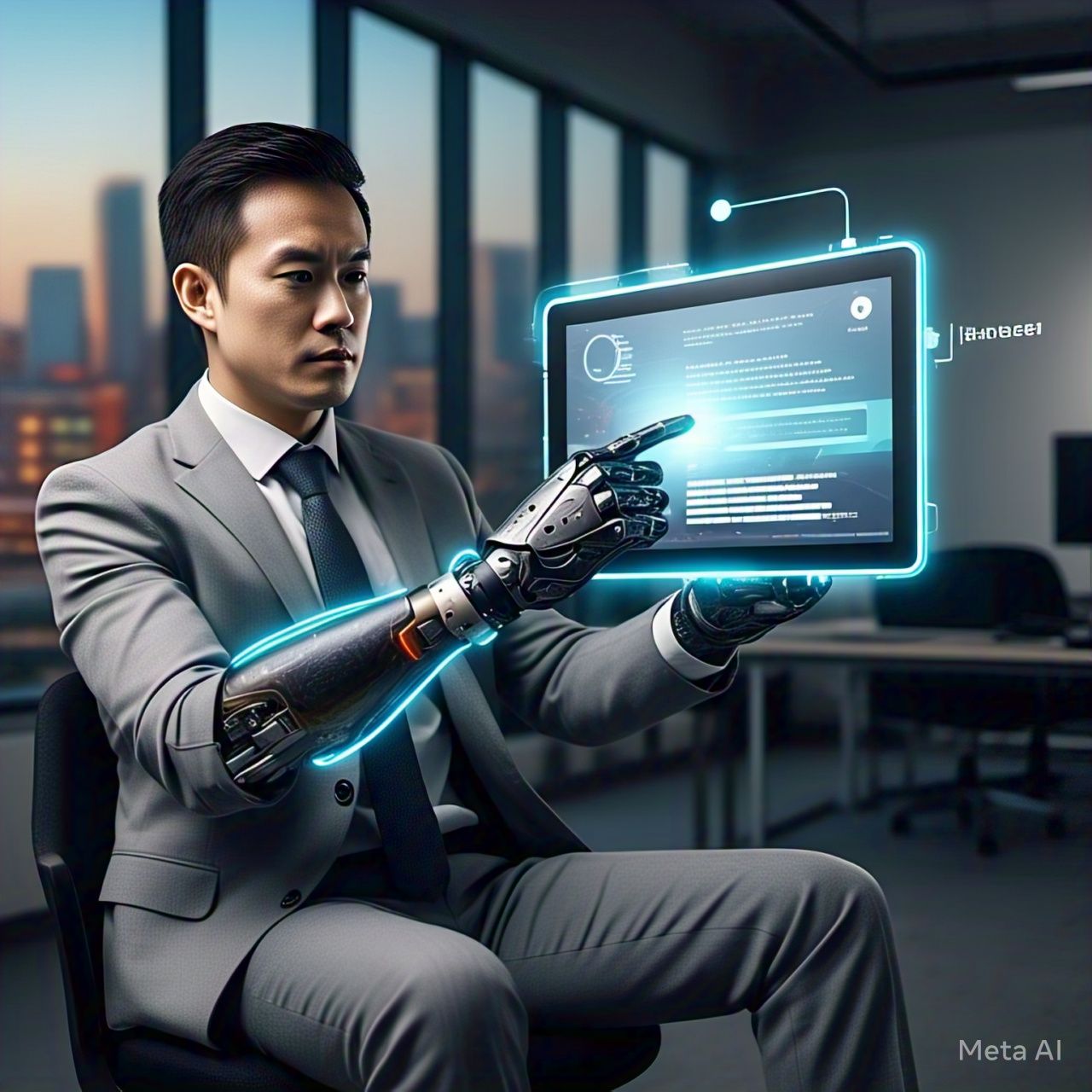
| AI-Powered Prosthetics | Improve movement and motor skills using machine learning and sensors | Open Bionics, DEKA Arm |
| Smart Glasses | Use AI to help visually impaired individuals recognize objects, text, and faces | Envision Glasses, eSight |
| Haptic Feedback Devices | Provide sensory feedback to people with hearing or vision impairments | Sunu Band, Dot Watch |
Voice Recognition and Speech-to-Text Technology
AI-driven speech recognition tools have enabled people with disabilities to interact with their devices using voice commands. Innovations such as:
- Voice Assistants: AI assistants like Siri, Google Assistant, and Alexa help users perform tasks using voice commands.
- Speech-to-Text Software: Applications like Dragon NaturallySpeaking transcribe spoken language into written text, aiding individuals with mobility or dexterity issues.
- Voice-Controlled Smart Home Devices: Amazon Echo, Google Nest, and Apple HomePod enable users with physical impairments to control lighting, appliances, and security systems using voice commands.
AI and Computer Vision for the Visually Impaired
AI is making significant advancements in helping visually impaired individuals navigate their surroundings:
- Object Recognition: AI-powered apps like Seeing AI and TapTapSee can identify objects and read text aloud.
- Facial Recognition: AI enables visually impaired users to recognize faces through apps like Be My Eyes.
- Navigation Assistance: GPS-based AI applications help guide visually impaired individuals safely.
- Braille Translators: AI converts digital text into braille, enabling those with visual impairments to read books and other written content.
AI in Education for Disabled Individuals
Personalized Learning
AI enables personalized learning experiences by analyzing a student’s learning patterns and adjusting educational content accordingly. Tools like:
- Text-to-Speech Software: Helps students with dyslexia and visual impairments.
- AI Tutors: Programs like Carnegie Learning offer personalized study materials.
- Real-Time Captioning: Tools like Ava use AI to transcribe speech into text for deaf or hard-of-hearing students.
AI in Employment and Workforce Inclusion
The job market is becoming more accessible for disabled individuals due to AI-driven solutions:
- AI-Powered Resume Screening: Identifies best-fit candidates, ensuring equal opportunities.
- Voice-Controlled Software: Helps individuals with motor impairments perform tasks.
- AI-Powered Workplace Assistance: Exoskeletons and robotic limbs assist employees with disabilities in performing tasks more effectively.
Ethical Considerations and Challenges
While AI is promising, ethical concerns exist:
- Privacy Issues: AI collects vast amounts of data, raising concerns about misuse.
- Bias in Algorithms: AI can reinforce societal biases if not developed carefully.
- Autonomy vs. Surveillance: AI can empower disabled individuals but also raise concerns over excessive monitoring.
The Future of AI in Accessibility
The future holds immense potential for AI-driven accessibility:
- Advancements in Brain-Computer Interfaces will enable direct interaction with technology.
- AI-Powered Robotic Assistance will enhance mobility.
- More Inclusive Smart Cities will use AI to ensure accessibility for all citizens.
Conclusion
AI is revolutionizing accessibility, enabling disabled individuals to lead more independent lives. With responsible development, AI can create a more inclusive and equitable society for everyone.
FAQs
- How does AI help people with disabilities?
AI assists with mobility, communication, and accessibility through smart technologies. - What are some AI-powered accessibility tools?
Examples include screen readers, AI-powered prosthetics, and voice assistants. - Are there ethical concerns with AI in accessibility?
Yes, concerns include data privacy, bias, and excessive surveillance. - What is the future of AI in accessibility?
The future includes more advanced brain-computer interfaces, AI-driven robotic assistance, and smart cities designed for inclusivity.